Adzooma
Rebuilding the Adzooma platform
- Role & Position
- Senior Designer
- Services
- Platform design, UX/UI
A full platform redesign to strip back years of feature bloat, refocus the product around its strongest workflows, and introduce a lightweight design system to keep it consistent as it scales.
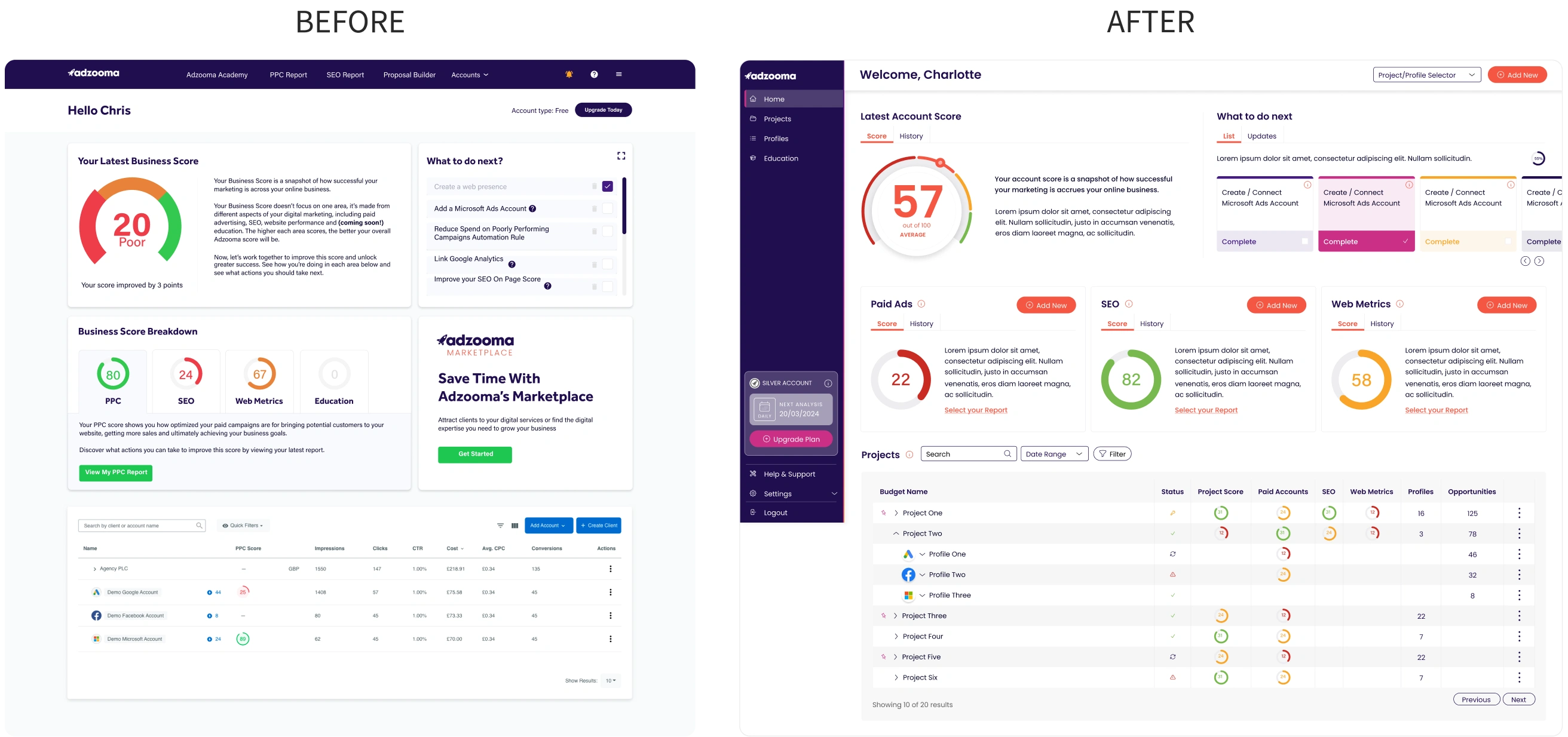
The Challenge
Adzooma had grown by stacking feature on top of feature without a clear product vision. The platform had become bloated, cluttered and visually inconsistent, with no connection to the brand identity being built on the marketing side.
Users were struggling to find value in the noise, retention was poor, and the gap between what the website promised and what the product delivered was undermining trust from the first login.
What We Did
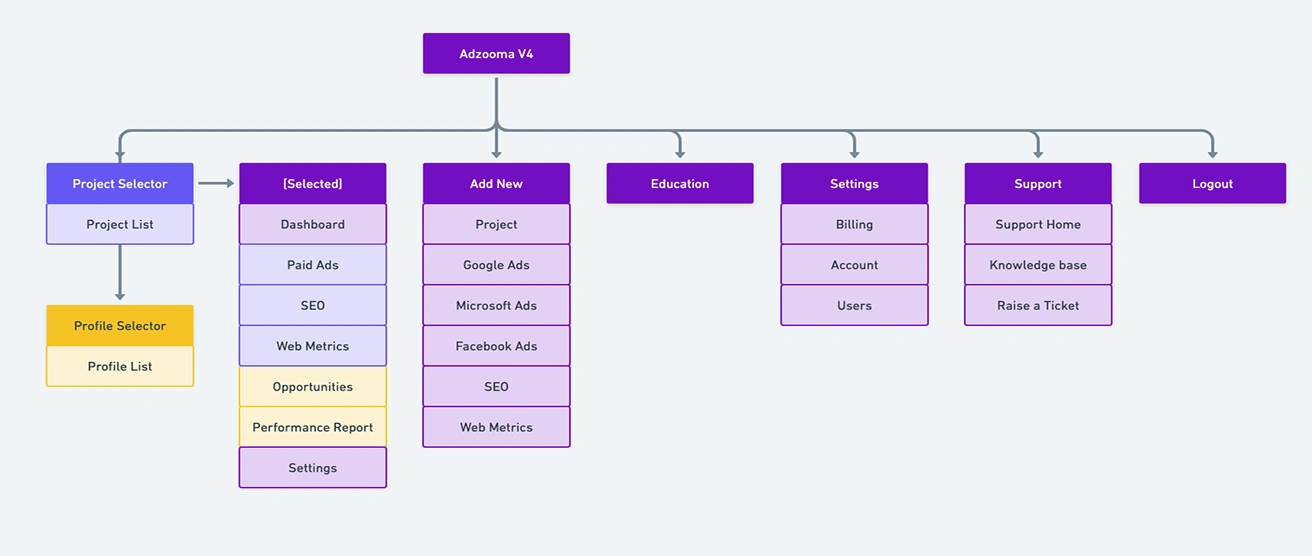
We audited every screen against the platform's original promise: helping users optimise PPC performance. Anything that didn't serve that promise was a candidate for removal. Working with the Product Owner and Front-End Engineer, we redrew the information architecture around the Opportunities engine as the product's true centre of gravity.

Platform Design
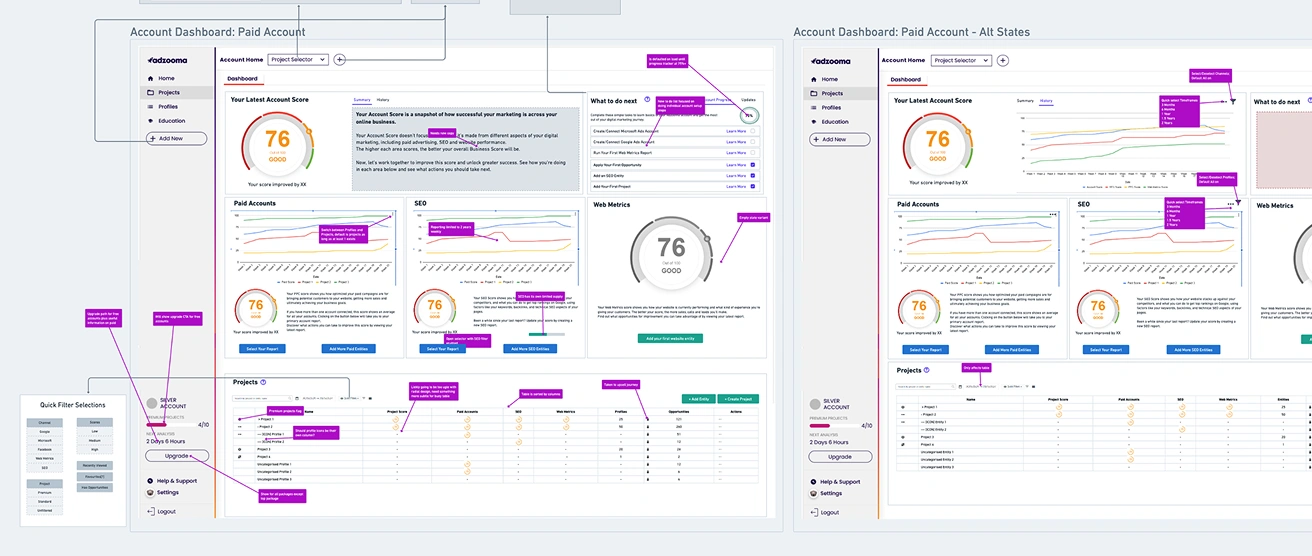
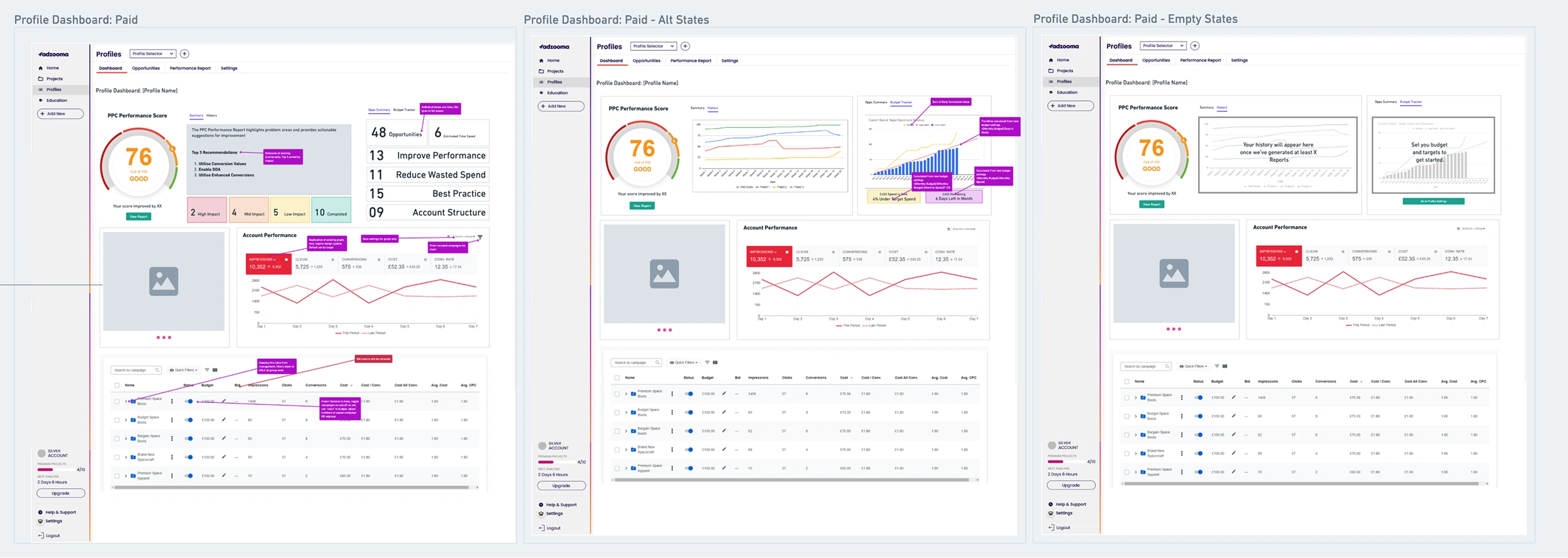
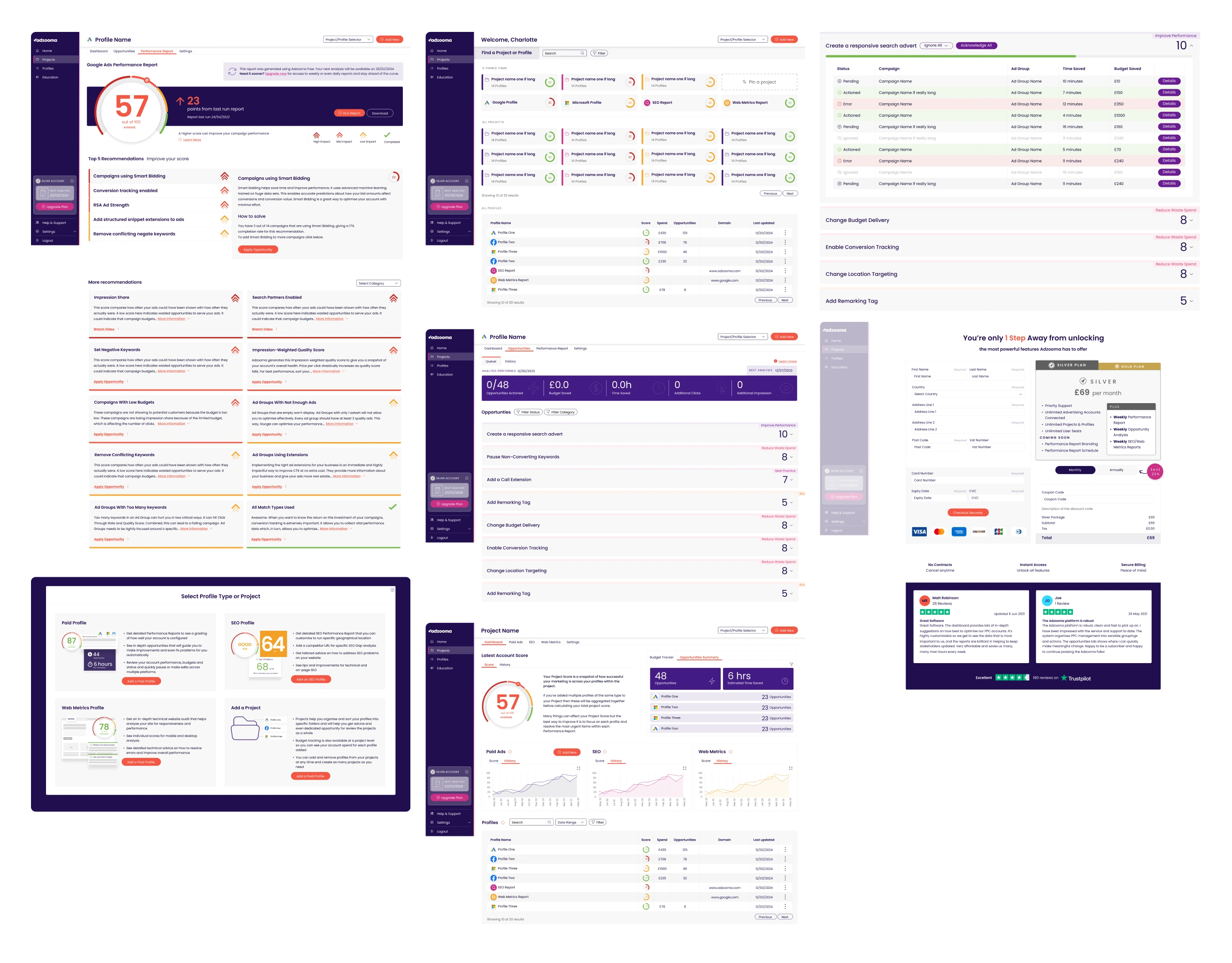
The redesign covers the full account experience: a profile dashboard breaking PPC, SEO and Web Metrics scores down individually, a project and profile selector for managing multiple accounts, an opportunities queue letting users action or ignore recommendations directly, and a streamlined checkout flow for upgrading plans. Rather than one flat account view, users can move between an overall project score and the individual profiles underneath it, with the same score and recommendation pattern used consistently at every level.
UI Components
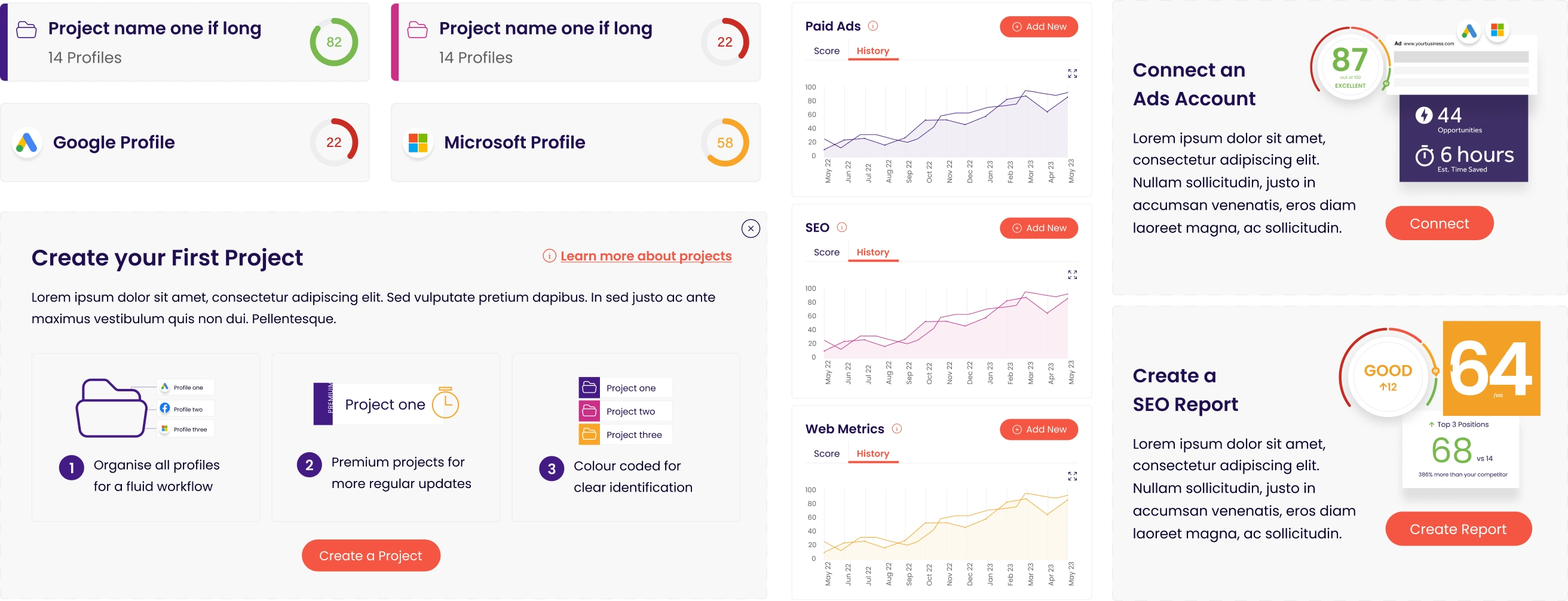
Reusable UI patterns tie the platform together: score cards showing a current result alongside historical trend, account connection prompts for adding a new ad platform, and contextual cards that nudge the next useful action, like creating an SEO report, rather than leaving users to work out what to do next themselves. The same first-project onboarding pattern used on initial setup reappears wherever a user hasn't added a profile yet, keeping empty states purposeful rather than a dead end.

Design System
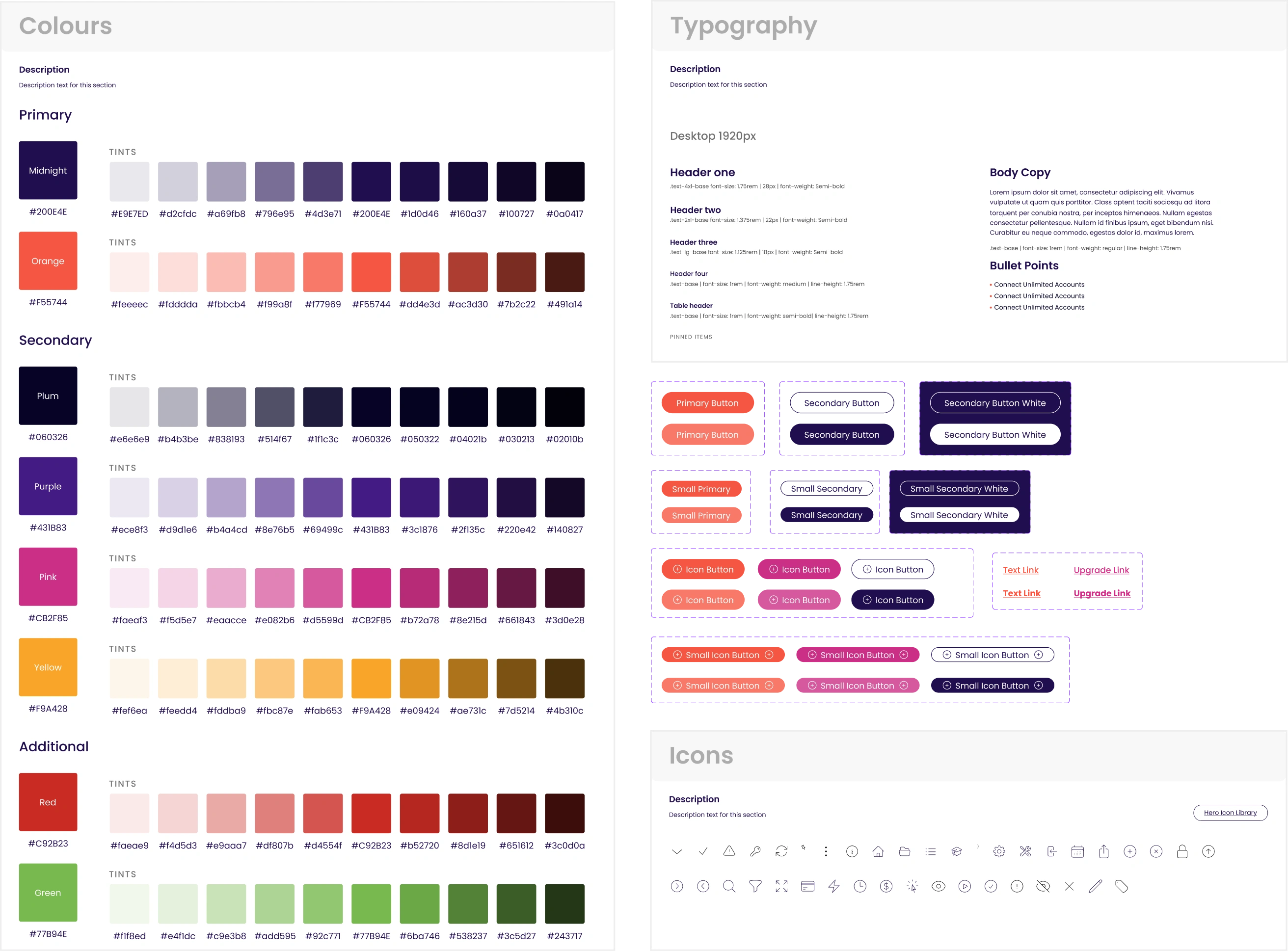
Alongside the platform rebuild, I built a simple design system so patterns stayed consistent across the redesign rather than getting rebuilt screen by screen: a primary and secondary colour palette with tints, a typography scale, and a core set of button and icon components. It wasn't built to the depth of a token-based system, more a shared reference that kept the visual language consistent as the platform was rebuilt, and made it easier for engineering to implement things the same way each time.
The Solution
The redesign stripped the platform back to its core value: helping users find and act on opportunities to improve their PPC performance. A consistent design language and simplified navigation made the experience coherent from first visit through to daily use.
Retention
+16%
Estimated improvement in user retention post-launch.
Iteration
-8%
Reduction in design iteration time thanks to the shared system.
Feature Set
-40%
Legacy features consolidated or removed in the refocus.
Key Deliverables
- Dashboard redesign, consolidating account score, PPC/SEO/Web Metrics summaries and 'what to do next' into one home view
- Restructured IA across Projects and Profiles, replacing a flat list with a clearer hierarchy
- Simplified ad account connection flow across Google, Microsoft and Facebook
- Opportunities and Performance Report screens, surfacing recommendations by impact
- A lightweight design system: colour palette, typography scale, and core button and icon components
Retrospective
The redesign taught me how much a coherent product story is worth. When the marketing site, the sign-up flow and the dashboard all speak the same visual language, users stop noticing the seams, and that quiet consistency does most of the work.
If I ran this again I would embed the design system work even earlier. Building components alongside the flows, rather than after them, would have compressed the last two months of the project into weeks.